
FAQ
A TIF is a commonly used economic development tool, which helps municipalities make needed improvements (roads and sewers) or helps attract private development.
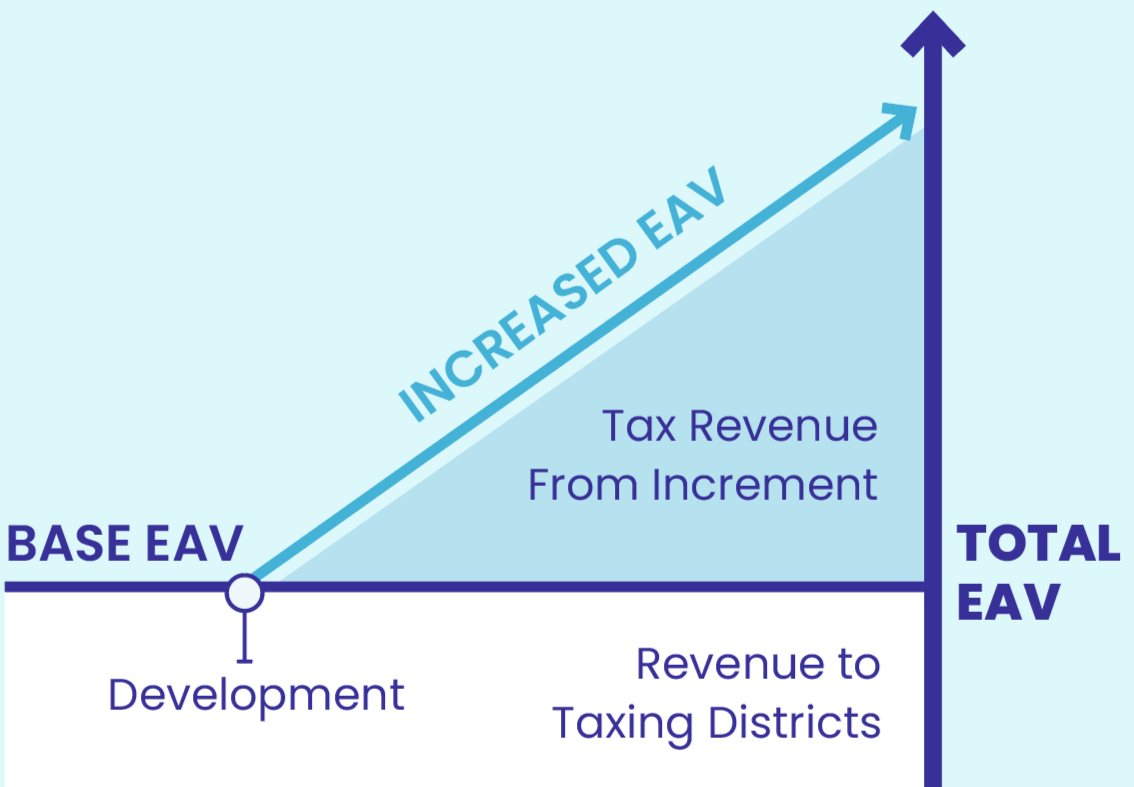
TIF generates a pool of money used for reinvestment within the TIF area. When a TIF district is created, the property values of the parcels within the district are set at a base equalized assessed value (EAV). Taxing bodies (Village, county, township, school districts, etc) continue to collect property taxes based upon the base EAV. Any increase in the EAV generates the TIF increment, which is then available for projects within the TIF district.
What is a TIF District?
Other Frequently Asked Questions
-
Once a TIF district is established, property taxes generated from the original base value continue to go to the local taxing bodies as they normally would. Any increase in property value within the district produces additional tax revenue, known as the increment.
That increment is placed in a special TIF fund and can be used to help pay for eligible improvements and redevelopment projects within the district.
-
Before establishing a TIF district, the Village conducts an eligibility study to determine whether the area meets the state’s criteria for redevelopment assistance. A redevelopment plan and program are then prepared outlining the goals, boundaries, and potential improvements within the district. The process includes review by a Joint Review Board representing local taxing districts and a public hearing to gather community input. After these steps, the Village Board may adopt the TIF district through formal ordinance.
-
No. Establishing a TIF district does not increase property tax rates. Property taxes are determined by local taxing bodies such as schools, counties, and municipalities.
When a TIF district is established, the current property tax base is frozen for taxing bodies such as schools and local governments. As redevelopment occurs and property values increase, the additional tax revenue generated from that growth is directed into a TIF fund to pay for redevelopment improvements within the district. The tax rate itself does not change because of the TIF, and once the district expires, the full increased tax base returns to all local taxing bodies.
-
The Lake Street Corridor TIF was created to help transform and revitalize an underutilized stretch of Lake Street into a thriving gateway for the Village of Bartlett. The goal is to reduce (or eliminate) “conservation areas” for improved parcels, “blighted areas” for unimproved parcels, and provide necessary direction and mechanisms to develop the Lake Street TIF District. Within this TIF, the Village of Bartlett also aims to improve the quality of life of its residents, visitors, and businesses.
Bartlett understands how to partner with developers to successfully bring projects to life. The Village established the Lake Street Corridor TIF to address conditions that have limited reinvestment in the area, including aging properties, vacant land, and infrastructure challenges. By capturing future increases in property tax value within the district, Bartlett can help fund site preparation, infrastructure improvements, and redevelopment incentives that encourage private investment. The goal is to turn the Lake Street Corridor into an attractive commercial and residential destination while strengthening the Village’s overall economic base.
-
The Village of Bartlett envisions a vibrant mix of commercial, residential, hospitality, and retail development along the Lake Street Corridor that will serve as a dynamic gateway into the community. Specific opportunities may include new restaurants, hotels, multifamily housing, mixed-use developments, and neighborhood retail. Many of these opportunities will be made possible by redeveloping large vacant parcels and underutilized sites that currently exist within the TIF district. Also, the Village is exploring strategic land acquisitions to further unlock development potential and will work closely with private developers to attract quality investment to the Corridor.
In addition to private development, the Village of Bartlett will also invest in a range of public improvements to support and stimulate redevelopment throughout the district. These improvements may include street resurfacing, widening, and reconstruction; upgrades to water, sewer, and stormwater infrastructure; sidewalk, curb, and gutter improvements; burial or relocation of overhead utility lines; demolition of obsolete structures; and beautification enhancements such as streetscaping, lighting, signage, and landscaping. Where applicable, some of these improvements may be completed in partnership with the Illinois Department of Transportation or other governmental agencies.
-
Redeveloping the Lake Street Corridor is a major component of Bartlett’s broader economic development vision. By guiding investment into this key gateway area, the TIF helps create new opportunities for businesses, residents, and visitors while increasing property values and local tax revenues over time. Strategic infrastructure upgrades, improved access, and site readiness make the Corridor more competitive for private investment. As redevelopment occurs, the Village benefits from a stronger commercial base and a more balanced local economy.
In the short term, the TIF can arrest the ongoing decline of existing assessed values in the Project Area. This would stabilize the existing tax base for local taxing agencies. In the long term, after the completion and payment of all redevelopment improvements and activities, the taxing districts will benefit from the enhanced tax base. These improvements would occur from the TIF’s increase in equalized assessed valuation.
-
TIF funds come from the growth in property tax revenue within the district. As property values increase due to new development or improvements, the additional tax revenue generated is deposited into the TIF fund.
These funds can only be used for eligible improvements and redevelopment projects within the district.
-
Any increase in property tax revenue above the original base value is captured and placed into the TIF fund.
These funds are then used to support projects and improvements that help encourage further development and revitalization within the district.
-
TIF funds are tracked separately from other Village funds and are subject to strict reporting requirements under Illinois law.
The Village prepares annual reports detailing revenues, expenditures, and project updates, which are available to the public.
-
As redevelopment occurs within the Lake Street Corridor, Bartlett residents may see improved roadways, enhanced public spaces, new dining and shopping options, and additional housing choices. The TIF structure directs the growth in property tax revenue generated by new development back into the area to pay for improvements, meaning the Village can invest in upgrades without placing additional tax burdens on current residents. In the long term, successful redevelopment strengthens the Village’s financial stability and enhances the overall quality of life for the community.
-
Yes. The Lake Street TIF is designed to attract new businesses and encourage redevelopment that creates both construction and permanent jobs.
As redevelopment projects move forward in the Lake Street Corridor, they will generate construction employment and long-term job opportunities in retail, hospitality, services, and other industries. New businesses drawn to the Corridor will expand employment opportunities within Bartlett while also providing new amenities for residents and visitors. By helping offset redevelopment costs and improving infrastructure, the TIF makes the area more competitive for businesses considering investment in the region.
-
The TIF supports improvements such as site preparation, roadway upgrades, and redevelopment of outdated or vacant properties. These investments make the Corridor more appealing to businesses, residents, and developers. As new development occurs and the area becomes more active and desirable, surrounding properties benefit from increased demand and improved market perception. Over time, these rising values strengthen Bartlett’s overall tax base.
-
The TIF provides funding tools that help redevelop sites that might otherwise remain vacant or underused. By addressing barriers to development, it makes reinvestment more feasible for private developers.
Some properties in the Lake Street Corridor face redevelopment challenges such as outdated infrastructure, environmental concerns, or site preparation costs. TIF funds can help offset these costs by supporting improvements like demolition, site remediation, utility upgrades, and public infrastructure. These investments reduce the financial barriers that often prevent redevelopment from occurring. With these challenges addressed, private developers are more likely to invest in projects that bring new life and economic activity to the area.
-
TIF districts rely on future growth in property values, so revenue depends on the pace of redevelopment within the district. The Village of Bartlett takes a measured approach when committing TIF funds and typically aligns investments with actual development activity. If growth occurs more slowly than projected, the Village can delay projects, scale investments, or pursue alternative funding sources. This flexible approach will help ensure the TIF remains financially responsible while continuing to support redevelopment opportunities.
-
Illinois law allows a TIF district to exist for a period of up to 23 years, which can be extended up to 13 more years if certain conditions are met. After the 23 years are up, the properties in the TIF district are released to the tax rolls so that the taxing bodies are able to collect tax revenues based on the updated value of the properties.
-
TIF districts are funded only by the property value growth that occurs within the district. If growth is slower than expected, fewer funds are generated.
The Village typically plans projects carefully and prioritizes investments based on available funds to ensure responsible use of the TIF program.